How Do I Help The One I Love With an Eating Disorder? A Conscious Parenting Approach
Conscious parenting

How Do I Help The One I Love With an Eating Disorder? A Conscious Parenting Approach  

Conscious parenting is about responding with awareness, emotional regulation, and compassion rather than fear or control. When someone you love is struggling with an eating disorder (ED), this approach becomes especially important. Supporting recovery requires presence, empathy, and intentional communication — all core elements of conscious parenting.

If you believe someone you love is struggling with an eating disorder (ED), it can be an overwhelming situation. Perhaps you’ve noticed that they are no longer the same person.

Their personality has lost its vigor and has become dull. Maybe you have observed them skipping meals at home or at school. Their behavior is making you so concerned that you feel as though you must say something. However, worries and doubts begin to fill your mind. What would I even say to them? What if they don’t listen to me? What if I make it worse? What if they resent me for trying to help? Take a breath.

Conscious Parenting

Preparing for the Conversation

Know in advance that this type of conversation is never easy.

but must be had because of the serious nature of eating disorders (ED). It will be just as difficult as trying to speak with someone who has a drinking problem or a drug addiction. It is crucial to say something sooner rather than later. Below are a few helpful suggestions to consider.¹
 

From a conscious parenting perspective, this conversation is less about control and more about connection.

If Your Loved One is in Treatment for an Eating Disorder

Having a support system is pivotal during the treatment of an ED.

Research has shown that encouraging family members to be proactive in the treatment process of an ED may help improve the family’s quality of life.² However, a support system does not always have to consist of family members; it can also include one’s spouse, close friends, religious leaders, mentors, a significant other, and/or neighbors.

A support system does not always have to look a specific way. Your loved one could be your daughter or son or friend, or significant other. What is important is that you are involved in treatment.

Set the Example They Need

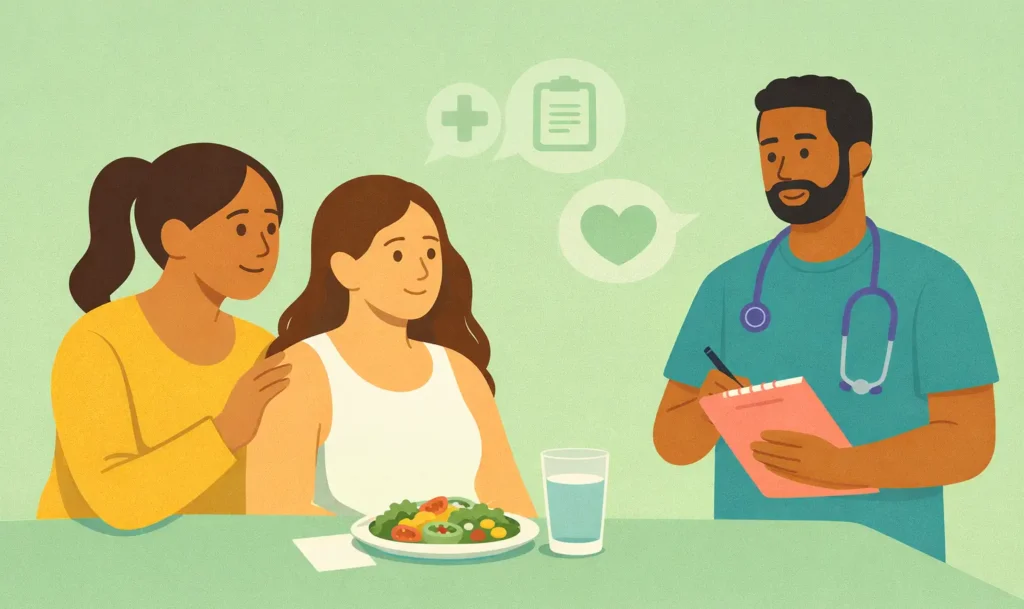
Be invested and proactive in the treatment of the ED. Participate in therapy sessions, in nutrition counseling, in meal support, and in the life of your loved one. Oftentimes, just showing up and listening is more than enough for people.

Conscious parenting emphasizes modeling behavior rather than enforcing it.

During the treatment process of ED, it is crucial for the patient to see other people in their lives model healthy eating habits. This does NOT mean going on a special keto diet. Quite the opposite, in fact. Model realistic eating habits at home, at work, at school, and wherever you go. Now is the time to practice being in tune with your hunger and fullness cues and to express love to your body and let your loved one know the significance of self-esteem.

Eat with them during meal support and do not succumb to the demands of the ED voice by letting your loved one pick the “safe food.” Instead, challenge the ED voice by showcasing enjoyment when eating pleasurable foods, savory foods, creamy foods, colorful foods, crunchy foods, and the list goes on. When your loved one sees you actively eat foods that the ED voice has previously deemed “bad” or “unsafe,” they will be encouraged to try new foods.

It will be difficult at first, but the reward of recovery will always outweigh any fleeting moment of discomfort.

Conscious Parenting

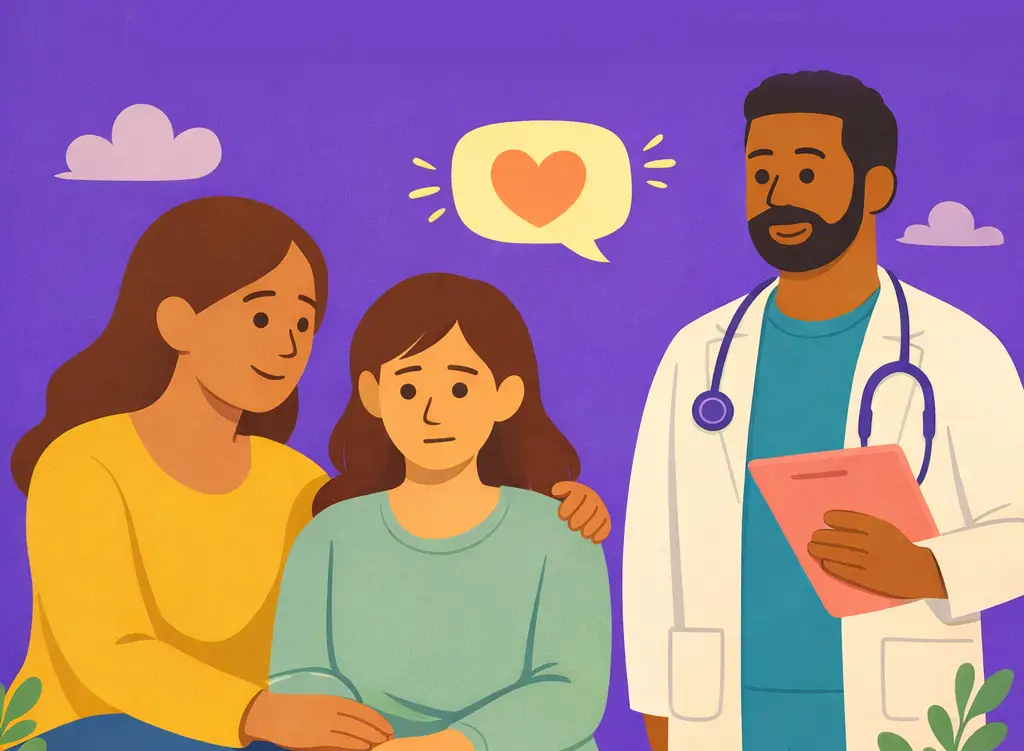
Voice compassion when the ED voice is being cruel. Shoot down the lies of the ED and reaffirm your loved one with the truth. They may not believe you at first, but if they see how much you genuinely believe in them and in their capacity for growth and healing, they might be more willing to try even if they are afraid.

Do not engage in negative self-talk with yourself; your loved one needs to see a healthy example of someone being kind to themselves, and you could be the only example they have. This emotionally regulated response is a core principle of conscious parenting.

Remember that the journey to recovery from an ED is an ongoing process. It could be any ED, whether it is anorexia nervosa, bulimia nervosa, or binge eating disorder; whichever one, having a strong support system is paramount.

If you are seeking assistance on how to best support your loved one while they battle against an ED, reach out to the FAB program! Our team can offer you professional guidance. You are not alone in trying to navigate how to help your loved one, and they are not alone in trying to overcome their ED.

“There's nothing more important for the bond you share with someone than being there for them whenever they need you.” — Suman Rai

Citations

1- jkandel@allianceforeatingdisorders.com. Supporting Loved Ones | Do’s & Don’ts – National Alliance for Eating Disorders. National Alliance for Eating Disorders. Published March 2025. Accessed February 6, 2026. https://www.allianceforeatingdisorders.com/dos-and-donts-loved-ones/…

2- Leonidas C, Dos Santos MA. Social support networks and eating disorders: an integrative review of the literature. Neuropsychiatr Dis Treat. 2014;10:915-927. Published 2014 May 21. doi:10.2147/NDT.S60735

Author

Back to Blog

©FAB Food & Body Program

Terms and Conditions